You Can Win a Stage Alone. You Can’t Climb the Mountain That Way
There is a moment in the Tour de France that most people miss.
It is not the sprint finish.
It is not the podium.
It is not the yellow jersey.
It is the moment in the middle of the mountain stage when the camera pulls back and reveals the truth.
The rider out front may look like they are leading alone. But they are not. There is a teammate cutting through the wind. Another tucked in behind, ready to take over. Another dropping back for food, water, and whatever else the team needs to keep moving.
And then, as the climb gets steeper, one by one, those teammates begin to fall away.
Not because they failed.
Because they gave everything they had to help one person cross the line.
The name on the leaderboard belongs to the individual.
But the climb was never completed alone.
That image matters because it reveals something many high performers forget: you might be able to win one stage of growth alone, but you cannot climb the whole mountain that way.
The Trap of Self-Sufficiency
High performers are often celebrated for their independence.
They get things done.
They carry pressure.
They deliver under demanding circumstances.
They prove, time and time again, that they can be trusted with the task.
And for a season, that ability is powerful.
There are moments in life and leadership when focus requires sacrifice. There are seasons when you have to say no, remove distractions, and lock into the work in front of you.
But the danger begins when the season never ends.
When “I just need to get through this” becomes the way you live.
When productivity becomes a reason to avoid people.
When pressure becomes something you carry in silence.
When relationships become optional because the work feels urgent.
That is when high performance begins to turn into isolation.
And isolation has a cost.
The same traits that helped you succeed, discipline, ownership, endurance, self-reliance, can eventually become the very traits that limit your next stage of growth.
Because growth is not just about how much you can carry.
It is about what you are willing to be exposed to.
New feedback.
New people.
New discomfort.
New reflections.
New standards.
That kind of growth rarely happens in isolation.
Stop Calling Isolation Strength
Somewhere along the way, many ambitious people started confusing self-sufficiency with high performance.
We started treating “I don’t need anyone” like a badge of honor.
But is the ability to complete a task alone really the highest expression of performance?
Or is it simply the first stage?
There is a difference between being capable and being complete.
Capable people can execute.
Complete performers know how to build around themselves.
That is what the best teams, athletes, leaders, and entrepreneurs understand. The climb does not get easier because you are talented. It gets steeper because you are growing.
And at a certain point, your ability to keep climbing depends less on how hard you can push alone and more on whether you have built the right support around you.
Community Is Not Comfort. It Is Practice.
Community can sound soft to high performers.
It can sound like networking, socializing, or something nice to have after the real work is done.
But real community is not comfort.
Real community is practice.
It is where you practice becoming the person you say you want to become.
The people closest to you often know your story. They know your strengths. They know your patterns. They may also know your excuses.
And because they love you, they can sometimes keep relating to an older version of you.
That is not wrong. It is human.
But growth requires environments where you are not protected by your reputation. Rooms where your title does not do the talking. Places where your résumé is not the most interesting thing about you.
Sometimes, the most powerful thing you can do is walk into a room where nobody owes you their belief.
A room where you have to show up as you are.
A room that stretches your standards.
A room that exposes the gap between where you are and who you are becoming.
That is not weakness.
That is courage.
The Best Climbers Know When to Stop Riding Alone
Professional cycling teaches us something profound about performance.
Many of the riders who reach the highest level grew up winning on their own. They were the strongest, fastest, most dominant riders in their environment.
That individual success is often what gets them recruited.
Then they reach the elite level and are asked to become something else.
A teammate.
A support system.
A standard setter.
A contributor to someone else’s win.
They have to trust that their effort matters even when it is not recognized. They have to believe that someone else winning can still mean they are winning too.
That is not natural.
It has to be practiced.
The same is true in business, leadership, and life.
At some point, the question can no longer be, “How much of this climb can I endure by myself?”
The better question is:
Where on my climb do I need to stop riding alone?
That question changes everything.
It forces you to look honestly at the pressure you are carrying. It challenges the story that being unsupported somehow makes you stronger. It invites you to build something more sustainable than personal endurance.
Because high performance is not just about how high you can climb.
It is about whether you have built a way to keep climbing.
The Real Measure of Growth
The strongest performers are not the ones who never need anyone.
They are the ones who know when the next level requires a different kind of strength.
The strength to ask for feedback.
The strength to enter rooms that intimidate them.
The strength to let others see the parts of the climb they have been hiding.
The strength to contribute to someone else’s success without needing the spotlight.
That is where growth becomes more than achievement.
It becomes transformation.
Because the mountain does not only test your capacity. It tests your support system. It tests your humility. It tests whether you are willing to stop protecting the version of yourself that got you here so you can become the version required for what is next.
So, the next time you find yourself pushing harder, carrying more, and quietly convincing yourself that this is just what high performance demands, pause.
Look around.
Ask yourself who is riding with you.
And if the honest answer is “no one,” then maybe the next breakthrough is not about going faster.
Maybe it is about no longer climbing alone.
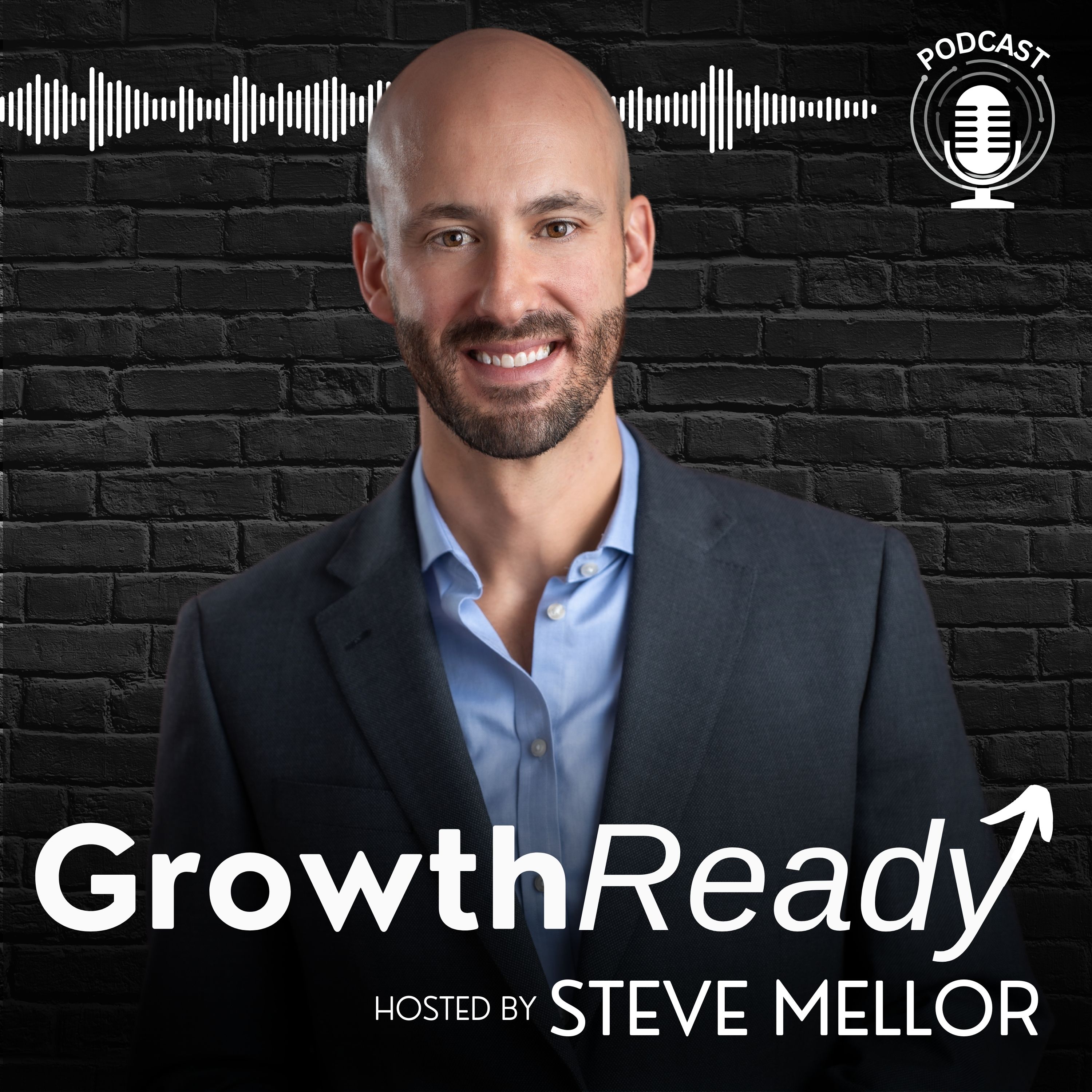
CEO of GrowthReady
Olympic swim coach turned high-performance strategist, Steve helps top leaders gain clarity, elevate performance, and lead with purpose. As founder of GrowthReady and host of the GrowthReady Podcast, Steve brings real-world strategies and straight-talk coaching to help you unlock your full potential.
-Featured on top leadership podcasts
-The GrowthReady Podcast Host
-Author of Shock the World: A Competitor's Guide to Realizing Your Potential
-Former Olympic-level coaching expertise applied to executive development

Stop Boxing In Your Life: What Kendall Breitman Teaches Us About Growth, Trust, and Community